The Albigensian Crusade

There are some histories that demand more than a straightforward telling.
The Albigensian Crusade is one of them.
This was not a brief eruption of violence, but a long and deeply unsettling period in the life of southern France, one that reshaped communities, beliefs, and landscapes over decades. It is a history marked by fear and loss, but also by resilience, conviction, and the quiet endurance of ordinary people.
When we look back on this period, it is tempting to focus only on the brutality of what occurred. To reduce places like Béziers, Carcassonne, and Montségur to the moments that sealed their place in history.
But these were living places long before they became symbols. And their stories did not end when the fighting did.
In 1209, following the murder of his papal legate Pierre de Castelnau, Pope Innocent III launched what became known as the Albigensian, or Cathar, Crusade. Its aim was to eradicate the Cathar movement that had taken root in the Languedoc region of southern France.
A Different Way of Seeing the World
The Cathars themselves are often described in stark theological terms, but at heart they were communities trying to live according to a deeply held spiritual worldview.
Cathar belief was dualistic. They understood existence as divided between a good, spiritual realm and a corrupt physical world. In their view, the human soul belonged to the spiritual realm and was trapped within the material one, bound to suffering, temptation, and decay.
This belief shaped how they lived.
Cathars rejected the authority of the Catholic Church, its sacraments, and the power of the Pope, not out of rebellion for its own sake, but because they believed true spiritual purity could not be mediated through wealth, hierarchy, or ritual. Many embraced lives of simplicity, poverty, and restraint, seeing material excess as a barrier to the soul’s eventual release from the physical world.
To their followers, this way of life was not dangerous or radical. It was sincere, disciplined, and meaningful. To the Church, however, it represented a profound challenge, not only to doctrine, but to authority itself.
Neighbours, Not Enemies
For many in the Languedoc, the Cathars were not strangers or agitators. They were neighbours, family members, craftsmen, farmers, and townspeople, living alongside Catholics within the same communities.
They worked, traded, raised children, and cared for one another. Their spiritual leaders, known as the Perfecti, were often admired for their discipline and integrity, and sought out for guidance, not because they wielded power, but because they lived visibly by the principles they preached.
In this context, the Cathars did not present a threat in the way later narratives often imply. They did not seek to overthrow secular authority, nor did they arrive as an external force. Their presence was quiet, local, and deeply embedded in the fabric of southern French society.
It was this very integration that made the situation so unsettling for the Church.
Because what unfolded in the early thirteenth century was not simply a campaign against a defined group of heretics. It was a sanctioned act of violence that would engulf entire towns and regions, affecting Catholics and Cathars alike.
For the first time, the language and violence of crusade were turned inward, against communities that had once been considered part of Christendom itself.
The First Fracture
The Albigensian Crusade began in the summer of 1209, and it did so with devastating speed.
In July of that year, crusading forces reached the town of Béziers. What followed was not a targeted action against a defined group, but a massacre that engulfed the entire population. Cathars and Catholics alike were killed, with little attempt made to distinguish between them.
It was here that the brutal logic of the crusade revealed itself most clearly.
According to contemporary accounts, when asked how the crusaders might identify the heretics within the city, the papal legate Arnaud Amaury is said to have replied, “Kill them all, God will recognise his own.”
Whether or not those words were spoken exactly as recorded, the sentiment they convey is unmistakable. Béziers was not treated as a community to be corrected, but as a warning to be erased.
For the people of southern France, this moment marked a profound rupture. It became clear that belief, allegiance, or innocence offered no protection. Entire towns could be destroyed, not for what they had done, but for what they represented.
This was no longer a campaign against a doctrine.
What followed was not a series of isolated sieges, but a slow unravelling of everyday life across southern France.

Living with Uncertainty
After Béziers, the crusade moved quickly.
On the 1st of August 1209, Carcassonne fell to the crusading forces. At that time, the city did not yet possess the formidable fortifications we see today. Much of what now defines Carcassonne visually was built later, in the decades that followed, shaped in part by the lessons of what had already occurred.
For those living in the region, Carcassonne’s fall reinforced a growing and deeply unsettling reality. Survival was no longer tied to belief, behaviour, or repentance alone. Outcomes varied wildly and unpredictably.
At Minerve in 1210, some Cathars were allowed to leave freely. Others were not. Those who had not yet reached the spiritual status of Perfecti were spared, and a small number who recanted their beliefs were pardoned. But for many, refusal to renounce their faith meant death. One hundred and forty were burned at the stake.
There was no consistent logic that ordinary people could rely on. Mercy and brutality existed side by side, applied unevenly and without warning.
For communities across the Languedoc, this uncertainty became its own form of terror. Families did not know whether surrender would bring exile, imprisonment, or execution. Towns could be emptied, stripped, or destroyed entirely. Lives could be reduced to what could be carried away, if anything at all.
Fear was no longer confined to moments of siege or battle.
It became woven into daily life.
Power, Ambition, and Consequence
As the crusade advanced, its violence was shaped not only by ideology, but by the men entrusted with enforcing it.
Responsibility for the murder of the papal legate Pierre de Castelnau was laid at the feet of Raymond VI of Toulouse, the most powerful lord of the region. Whether through guilt, political expediency, or convenience, his punishment was absolute. His lands were declared forfeit, and authority over much of southern France was transferred to a northern French nobleman, Simon de Montfort.
Simon de Montfort proved to be a formidable commander. Highly effective, deeply ambitious, and unwavering in his pursuit of victory, he was widely regarded, even by contemporaries, as one of the great military leaders of the Middle Ages. He was also feared for his severity. Under his leadership, the crusade became increasingly systematic, its brutality no longer sporadic, but strategic.
From a Plantagenet perspective, his name carries an additional resonance. This was the father of the later Simon de Montfort, who would become one of Henry III’s greatest adversaries during the Second Barons’ War. The legacy of power, ambition, and challenge to authority did not end in the Languedoc.
Yet not all of those caught in the crusade’s path wielded power.
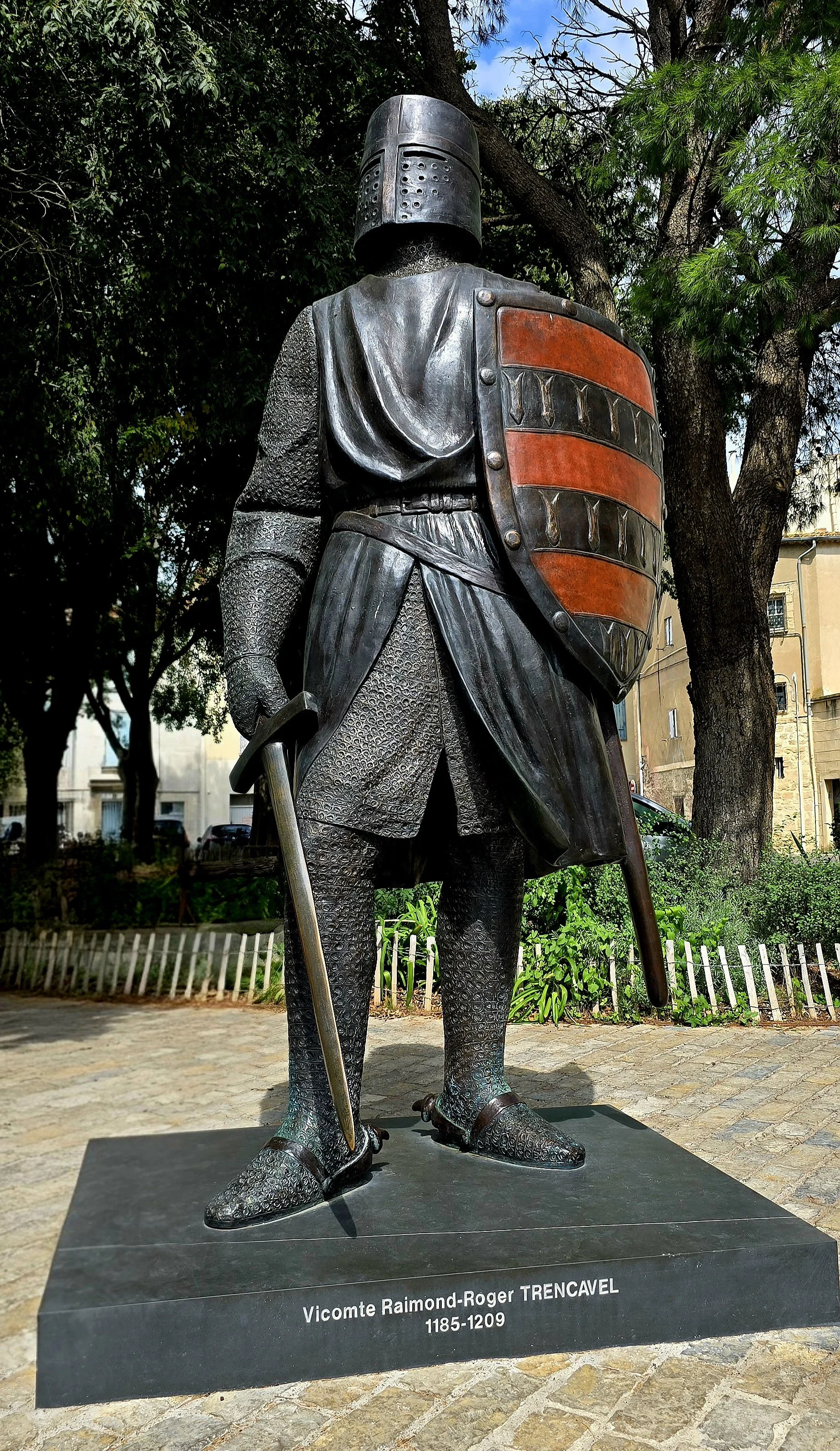
When Carcassonne fell, its young viscount, Raymond-Roger Trencavel, was taken captive despite assurances of safe conduct. He died only months later, imprisoned in his own city, a victim not of battlefield defeat, but of betrayal and confinement.
Trencavel’s fate stands in quiet contrast to that of men like de Montfort. He was not remembered for conquest or ambition, but for loyalty to his people and the courage to stand with them. His death marked not just the loss of a leader, but the silencing of a regional voice that had once defended the independence of the Languedoc.
When Resistance was Punished
By 1211, it was clear that resistance would be met with overwhelming force.
The small town of Lavaur became one such example. Defended by Guiraude de Lavaur, herself identified as a Cathar sympathiser, the town withstood a siege for several weeks. It was a courageous stand, but courage offered no protection.
On the 3rd of May 1211, a breach was made in the town walls and the crusading forces entered.
What followed was not judgement in any meaningful sense, but reprisal.
Guiraude de Lavaur was executed without trial. Contemporary accounts describe her being thrown into a well and crushed beneath a pile of stones. Hundreds of others met similarly uncompromising ends. Lavaur would come to be remembered as the site where the largest number of people were burned at the stake during the crusade. Around four hundred lives were lost there alone.
For those watching from nearby towns and villages, the message was unmistakable.
Resistance would not be negotiated. It would be erased.
At this point, the crusade had moved far beyond the suppression of belief. By this stage, survival depended less on belief or behaviour than on the arbitrary decisions of those in power.
The Last Stronghold
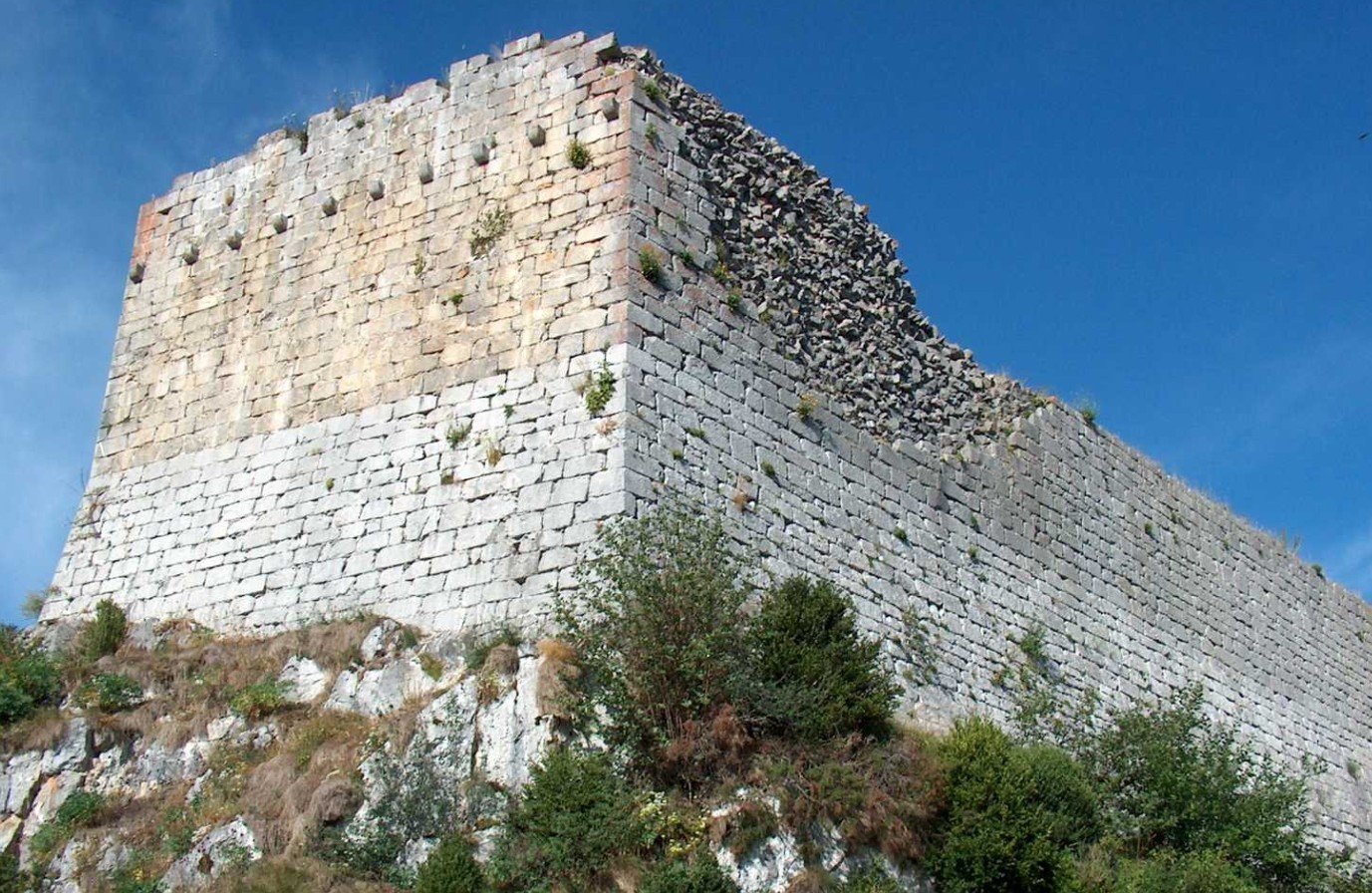
By the early 1240s, Montségur had become more than a fortress.
Perched high on a rocky spur, isolated and seemingly impregnable, it stood as both a refuge and a symbol. For those who still held to Cathar belief, it represented safety, continuity, and the hope that endurance itself might be enough.
The siege of Montségur began in May 1243. It was not swift. Months passed as the defenders held out against increasingly determined forces. It was only through strategy and deception that the crusaders eventually gained control of the barbican, breaking the fortress’s defences from within.
In March 1244, Montségur surrendered.
What followed was not chaos, but grim finality. Those who refused to renounce their beliefs were given time to prepare themselves. More than two hundred men and women chose to remain steadfast. They were burned at the foot of the mountain in a single act that brought the long campaign to its symbolic close.
With the fall of Montségur, organised Cathar resistance effectively ended. But the loss extended far beyond a military defeat.
For the people of the Languedoc, it marked the extinguishing of a way of life that had once flourished openly within their communities. Belief, culture, and identity were irrevocably altered, not by a single moment of violence, but by decades of fear, loss, and enforced conformity.
Montségur did not fall because it failed.
It fell because the world around it had changed beyond recognition.
Holding the Story with Care
The Albigensian Crusade left no single ending.
Its consequences lingered long after the final fires were extinguished, long after Montségur fell, and long after Cathar belief was driven underground. What was lost cannot be measured only in lives taken, but in cultures reshaped, voices silenced, and a region forever altered by fear and enforced conformity.
When we walk through places like Carcassonne today, it can be tempting to let a single moment define everything that came before and after.
But these places are more than that.
They were communities before they became battlegrounds. They endured long after the violence passed. People continued to live, work, raise families, and find meaning in landscapes that had known devastation.
That is why this history asks something of us.
It asks us not to look away from what was done, but also not to reduce the past to its darkest moments alone. It asks us to remember that belief, power, fear, and courage all coexisted here, often in the same streets, the same homes, the same lives.
To tell this story responsibly is not to soften it.
It is to widen it.
And in doing so, we honour not only those who suffered, but those who lived quietly, faithfully, and resiliently in the shadow of events they did not choose.
This is difficult history.
But it is also human history.
And it deserves to be held with care.
If this way of engaging with history resonates, you can read more about how I approach our journeys and the stories they carry here.
Max
Carcassonne photo © Plantagenet Discoveries/Illumination Creative Commons Public Domain/Raymond-Roger Statue photo By Pedemann - Own work, CC BY-SA 4.0, wikipedia commons/Montsegur photo all-free-photos.com