Kenilworth Castle

Kenilworth Castle is one of the great historic sites of England, a vast fortress and royal residence whose walls have witnessed some of the most dramatic moments of the medieval age. From King John and Simon de Montfort to John of Gaunt and Henry V, the story of this remarkable place is woven through the lives of powerful figures who shaped the course of English history.
Today its towering ruins still dominate the Warwickshire landscape, but in the later Middle Ages Kenilworth was far more than a fortress. It was a royal stronghold, a political stage, and the setting for events that echoed far beyond its massive walls, including the siege that followed the Second Barons’ War and the shifting struggles of power that marked the Wars of the Roses.
Standing before Kenilworth for the first time, the sheer scale of the fortress quite literally stopped me in my tracks. Even in ruin it is immense, the kind of place that makes you instinctively pause and imagine what it must once have been like when its towers, halls, and great walls were filled with life. Centuries of history seem to cling to the stone itself. Although the castle was deliberately slighted in 1649 by Parliamentary forces during the English Civil War, enough of its vast structure survives to reveal the story of how it evolved over nearly five hundred years, from the early Norman foundations of Henry I to the magnificent palace created for Elizabeth I.
Yet for me the true fascination of Kenilworth lies in something less tangible than its walls. This is a place where the presence of the great figures of medieval England still feels remarkably close. Kings, rebels, courtiers, and power brokers all passed through these gates, and when you stand within the ruins it is almost impossible not to sense the weight of the political dramas that once unfolded here.

Kenilworth’s story begins in the early twelfth century with a man who understood both power and opportunity. Geoffrey de Clinton, Lord Chamberlain and treasurer to King Henry I, built the first great stone tower on this site. Today that keep still stands as the earliest surviving part of the castle, a reminder of the ambitious Norman official who first recognised the strategic importance of this place.
What makes Kenilworth even more fascinating is its location. When I first realised that Warwick Castle lies only seven miles away, it immediately raised a question in my mind. Why would two such formidable fortresses stand so close to one another? The answer lies in the political tensions of the time. Geoffrey de Clinton was a rival of Roger de Beaumont, the powerful Earl of Warwick.
In an effort to counterbalance Beaumont’s growing influence, Henry I appointed Clinton as Sheriff of Warwickshire, and Kenilworth became part of that delicate political manoeuvre.
After Clinton’s death in 1133 the castle passed to his son, but the rivalry between the two families continued for some time. Eventually Geoffrey II de Clinton was forced to make peace with the Beaumonts, sealing the agreement by marrying Agnes, the Earl of Warwick’s daughter. For a time Kenilworth settled into a quieter phase, although the wider kingdom certainly did not. The country soon descended into the chaos of the Anarchy, the bitter struggle for the throne between Henry I’s daughter Matilda and her cousin Stephen of Blois.
When Henry II finally secured the crown in 1154, Kenilworth passed fully into royal possession. By this stage the castle consisted of the great Norman keep, an inner defensive enclosure, a simple causeway across a small lake, and surrounding lands used for hunting. Yet even at this early stage Kenilworth was already proving its strategic value. During the rebellion of Henry II’s sons in 1173–74, the king reinforced the garrison here, recognising that this growing fortress would play an important role in the turbulent politics of medieval England.

For several decades Kenilworth remained relatively quiet, but everything began to change during the reign of King John. By the early thirteenth century tensions between the crown and the barons were steadily worsening, and John responded in the way medieval kings often did when authority felt threatened, by strengthening the fortresses that guarded his realm.
Kenilworth became one of the great beneficiaries of this programme. Beginning around 1210, John invested heavily in transforming the castle’s defences. Over £1100 was spent constructing a massive outer bailey wall in stone and improving the existing fortifications. The result was a fortress of formidable scale, one that would soon rank among the largest and strongest castles in England.
Yet the very tensions that prompted this work soon caught up with the king. During the crisis that led to Magna Carta in 1215, Kenilworth was one of the castles John was forced to hand over as a guarantee of the agreement with the rebellious barons. The arrangement did not last long, however. In the unsettled years that followed the king’s death, the castle returned to royal control during the early part of the reign of his young son, Henry III.
Perhaps the most remarkable of John’s improvements was the creation of the Great Mere. By damming the nearby Finham and Inchford Brooks, engineers flooded the surrounding landscape to form an enormous artificial lake that wrapped around much of the castle. Standing there today it is difficult to imagine the full scale of this defence, but the land stretching out in front of the ruins would once have been covered by water, turning Kenilworth into something close to an island fortress and making any attack a far more daunting prospect.
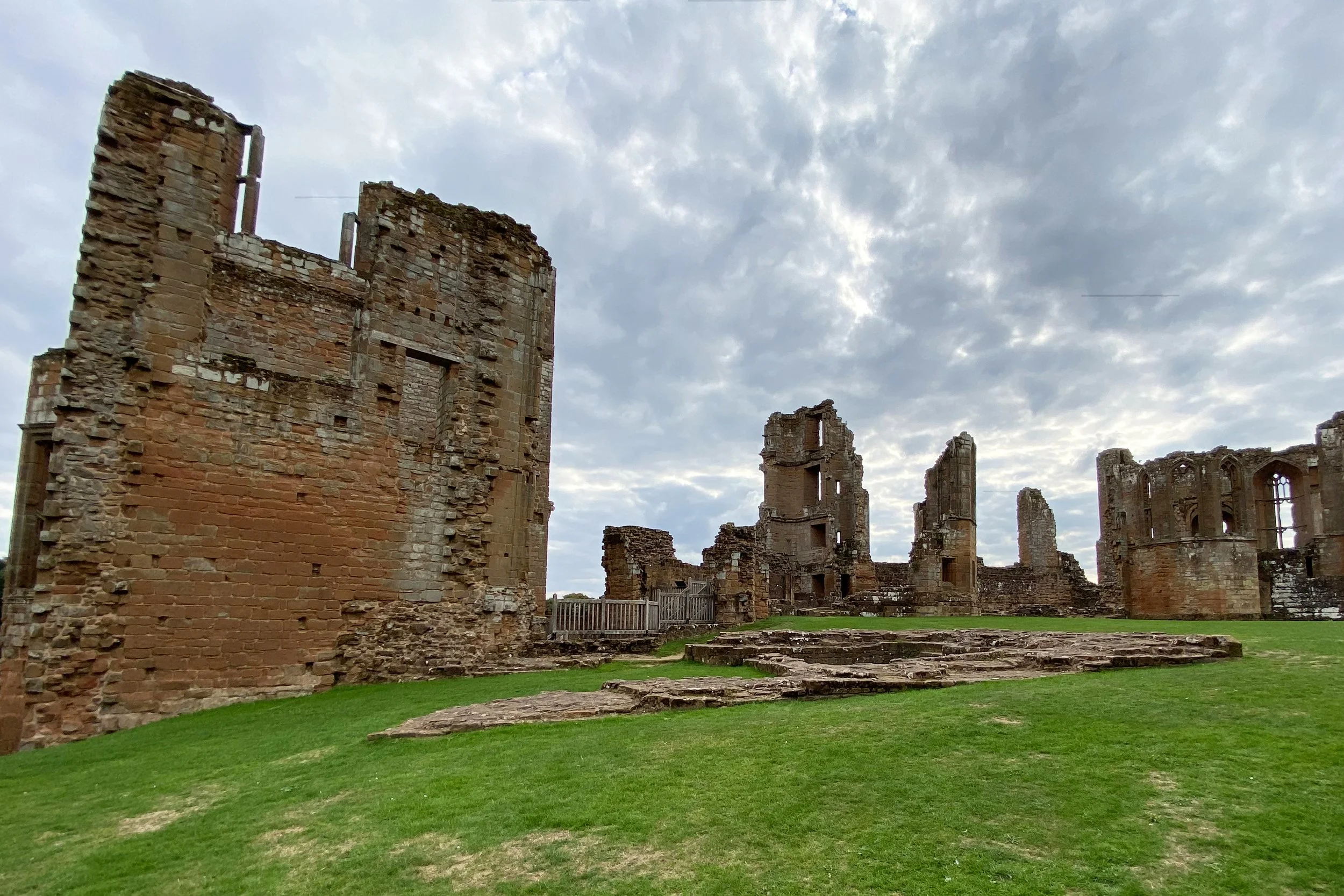
Kenilworth entered the centre of England’s political drama during the reign of Henry III. In 1244 the king granted the castle to his brother-in-law Simon de Montfort, Earl of Leicester, at a time when relations between the two men were still warm. Simon had married Henry’s younger sister Eleanor, the widow of William Marshal’s son, and for a time the alliance appeared secure.
With the benefit of hindsight, however, it is difficult not to wonder how many times Henry later regretted both decisions, placing such a formidable fortress in Simon’s hands and giving him the hand of his sister.
Over the following years the relationship between king and earl slowly deteriorated. Many of Henry’s barons had grown deeply frustrated with the influence of the king’s Lusignan half-brothers, whom Henry favoured with lands and titles that the English nobility believed should have remained in their own hands. What began as a movement to reform royal government gradually hardened into open opposition, and Simon de Montfort emerged as the natural leader of the baronial cause.
By 1263 the conflict had erupted into what became known as the Second Barons’ War. Montfort’s military skill and commanding personality placed him firmly at the head of the rebellion. After his dramatic victory at the Battle of Lewes in May 1264, both King Henry III and his son, the future Edward I, fell into Montfort’s hands. For a brief time Prince Edward was even held here at Kenilworth before being moved to Hereford, while Montfort effectively ruled the kingdom in the king’s name.
That fragile dominance ended abruptly in August 1265 when Montfort was defeated and killed at the Battle of Evesham by the now-escaped Prince Edward. Yet the rebellion did not die with him. The surviving baronial forces regrouped at Kenilworth, turning the great fortress into the final stronghold of resistance.
What followed was one of the most remarkable sieges in English history. Edward surrounded the castle with a vast army, but Kenilworth’s immense walls and the great water defences created decades earlier made it extraordinarily difficult to capture. For nearly six months the rebels held out behind the fortress walls, the longest siege ever recorded in medieval England and one of the largest in terms of the number of soldiers involved. Only in December 1266, weakened by starvation and disease, did the defenders finally surrender the castle.
In the aftermath of the great siege, Kenilworth entered a new chapter in its history. In 1267 Henry III granted the castle to his son Edmund Crouchback, creating him the first Earl of Lancaster. From that moment the fortress became closely associated with the powerful Lancastrian family, whose influence would shape the castle, and England for that matter, for generations.
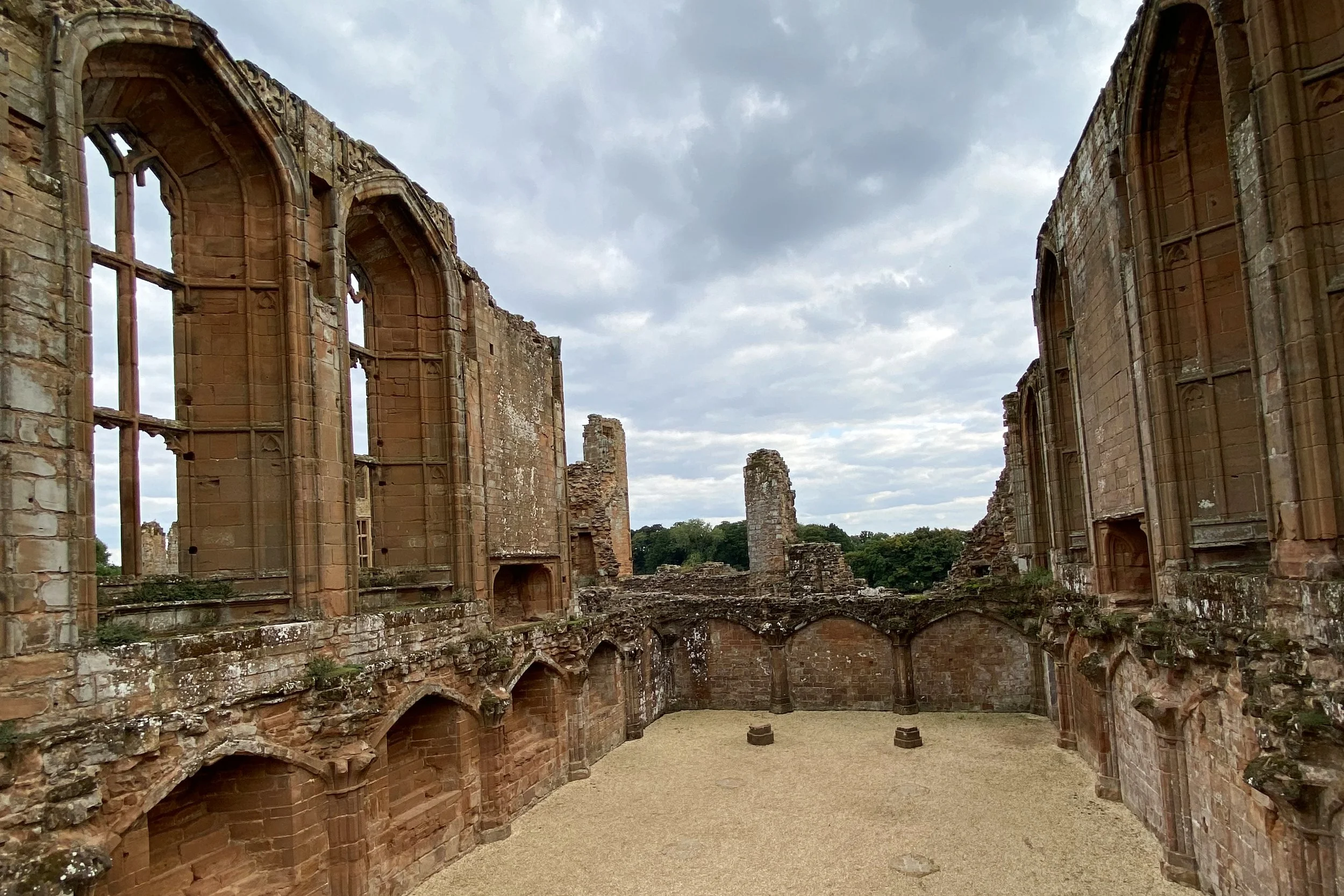
During the early fourteenth century Edmund’s son, Thomas, the second Earl of Lancaster, transformed the castle once again. Between 1314 and 1317 he constructed a magnificent Great Hall. Even in its ruined state today, walking through that vast space is an extraordinary experience. It is impossible not to pause and imagine the great gatherings that once took place there.
If those walls could speak, they would tell stories filled with both triumph and tragedy. They would recall how Thomas himself was captured after the Battle of Boroughbridge in 1322 and executed for treason following his opposition to King Edward II. His estates, including Kenilworth, were confiscated by the crown, and the king and his queen, Isabella of France, later celebrated Christmas here in 1323 amid lavish festivities.
Yet the castle would soon witness an even more dramatic moment in English history. In 1326, when Edward II was captured during the rebellion led by Isabella and her ally Roger Mortimer, the defeated king was brought to Kenilworth. For a short time he was held here under the custody of Henry, the third Earl of Lancaster. It was within the Great Hall that a delegation of leading barons attempted to persuade the king to abdicate the throne in favour of his son, Prince Edward. When Edward refused, he was informed that he had been deposed, and on 21 January 1327 he formally resigned the crown at Kenilworth. Although he was initially held at the castle, fears that supporters in the Midlands might attempt a rescue led Isabella and Mortimer to secretly transfer him to Berkeley Castle, where he died later that year under circumstances that remain the subject of much debate.

Kenilworth remained one of the principal estates of the Lancastrian family for the next several decades. In 1351 Edward III elevated the earldom of Lancaster to a duchy, creating Henry of Grosmont the first Duke of Lancaster. When Henry died in 1361, his vast inheritance passed through his daughter Blanche to her husband, John of Gaunt, the king’s third surviving son.
Under John of Gaunt, Kenilworth reached the height of its splendour. Between 1372 and 1380 he undertook major building works within the inner bailey, including the construction of an enormous new Great Hall inspired by the design of his father’s hall at Windsor Castle.
Standing among the ruins today it is not difficult to imagine the feasts, ceremonies, and celebrations that once filled this space, the echoes of conversation and the clinking of goblets carrying through the hall as some of the most powerful figures in the kingdom gathered here.
When Gaunt’s son eventually became King Henry IV in 1399, Kenilworth passed into royal possession once more. For the Lancastrian kings it remained a favoured residence, prized not only for its grandeur but also for the excellent hunting in the surrounding countryside.
Kenilworth’s story did not end with the age of John of Gaunt and the Lancastrian kings. During the turbulent years of the Wars of the Roses the castle again found itself drawn into the struggles for power. In 1459, as conflict between the houses of Lancaster and York intensified, Margaret of Anjou used Kenilworth as a secure Lancastrian stronghold where royal forces could gather. Once again the great fortress in the Warwickshire countryside stood at the centre of England’s political storm.
Following the Battle of Bosworth and the birth of the Tudor dynasty, Kenilworth remained one of the crowns most illustrious fortresses. Both Henry VII and Henry VIII enjoyed the use of this magnificent castle.
In 1553 John Dudley, Duke of Northumberland, de facto regent in the later years of Edward VI’s reign, was granted Kenilworth, and it was he who had the existing stables built, unfortunately he did not get to enjoy it for long as he was executed later that year for his part in putting his daughter-in-law, Lady Jane Grey, on the throne in place of Mary I.
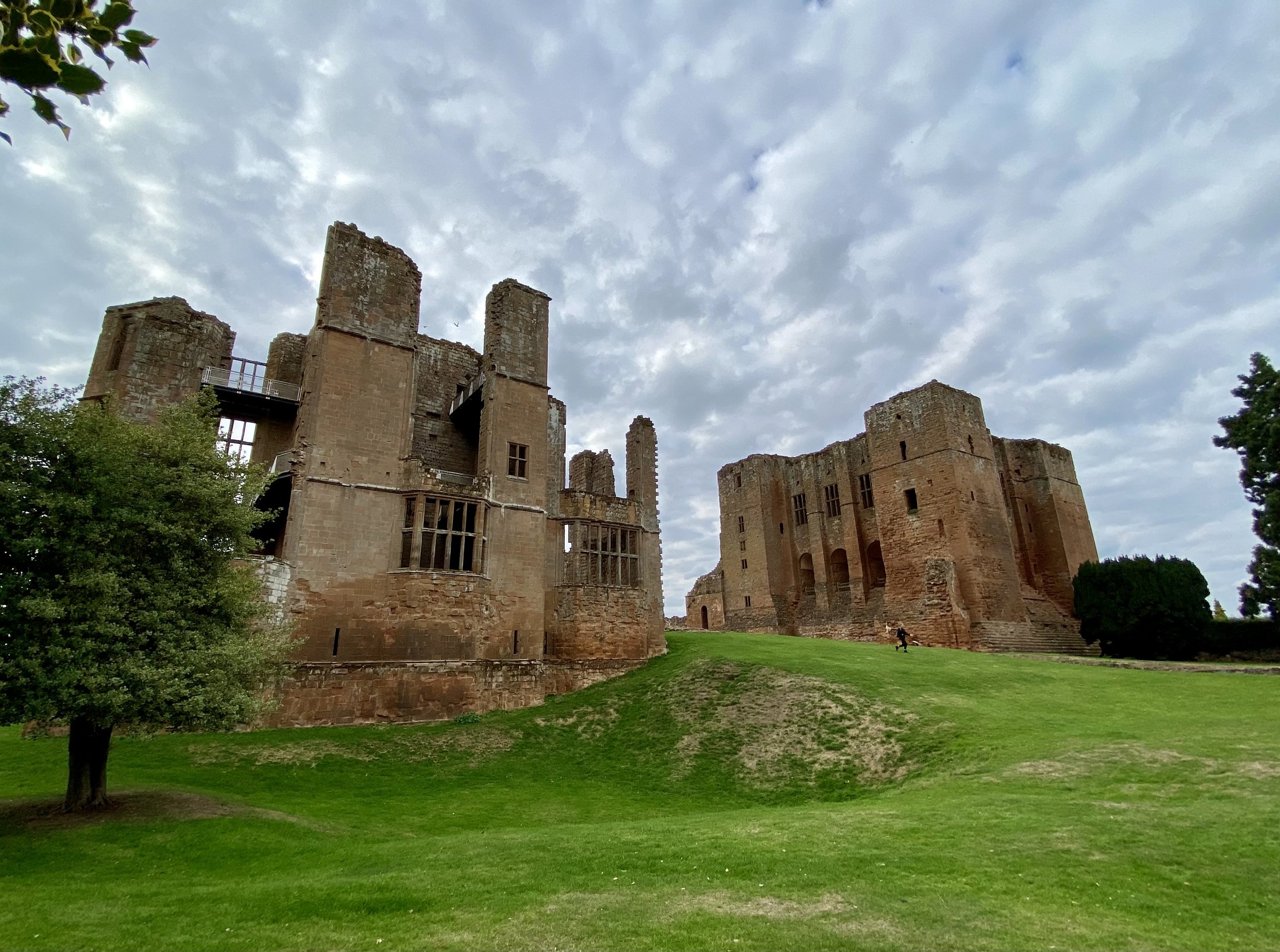
Following the Battle of Bosworth in 1485 and the rise of the Tudor dynasty, Kenilworth once again found itself firmly within the orbit of royal power. The vast fortress remained one of the crown’s most impressive residences, and both Henry VII and his son Henry VIII made use of the castle during their reigns. Even after centuries of conflict and political upheaval, Kenilworth continued to stand as one of the great strongholds of the English crown.
A new chapter began in 1553 when the castle was granted to John Dudley, Duke of Northumberland. Dudley had become the dominant political figure during the final years of Edward VI’s reign, effectively governing the kingdom as the young king’s regent. During his brief ownership he undertook improvements to the castle, including the construction of the large stables that still survive today.
Unfortunately, Dudley’s fortunes would change with dramatic speed, when later that same year he was executed for his role in attempting to place his daughter-in-law, Lady Jane Grey, on the throne instead of the rightful heir, Mary I. Yet the Dudley connection with Kenilworth did not end there. A decade later the castle would pass to John Dudley’s son, Robert Dudley, one of Queen Elizabeth I’s closest companions, who she created Earl of Leicester in 1564.

Over the following decades Robert Dudley transformed Kenilworth into one of the most magnificent Elizabethan residences in England. Among his most striking additions was a four-storey building within the inner court known as Leicester’s Tower, designed specifically for the Queen’s use.
It was first constructed in 1572 and then further improved in preparation for her celebrated visit to Kenilworth in 1575. Dudley spared no expense in ensuring that the queen would be received in surroundings worthy of her status.
Beyond the walls of the castle he also created an extraordinary privy garden for Elizabeth, laid out with carefully ordered paths, bowers, arbours and ornamental seating.
The garden was intended as a place of beauty and quiet retreat, a setting where the queen could stroll and enjoy the splendour of Kenilworth away from the noise and ceremony of court.
The Elizabethan garden visitors see at Kenilworth today is a modern recreation of this remarkable space. Its design is based largely on the vivid eyewitness account of Robert Langham, an official who famously managed to slip into the garden while the queen was out hunting and recorded what he saw in extraordinary detail. When English Heritage reconstructed the garden in 2009, Langham’s description became the guide that allowed them to recreate one of the most beautiful examples of an Elizabethan pleasure garden.
Strolling through this peaceful garden, breathing in the scent of flowers and watching the colours shift in the light, it is easy to understand why Elizabeth herself found Kenilworth so enchanting. After centuries of political intrigue, rebellion, royal visits and great celebrations, this quiet corner of the castle almost feels like the place where the story pauses for a moment to breathe.
Yet beyond the garden walls the ruins of Kenilworth still rise in silent testimony to everything that has happened here. Standing among those vast stones, it is impossible not to feel the presence of the past. Kings and rebels, soldiers and courtiers, triumph and tragedy, all have left their mark on this extraordinary place. For me, Kenilworth is far more than an impressive medieval ruin. It is one of those rare places where the history of England feels almost tangible, where the stories of centuries seem to linger in the very air. And perhaps that is why Kenilworth continues to hold such a special place in my heart, in fact, it is by far my favourite English castle to date, because within these walls the story of the Plantagenet age still feels vividly alive.
I truly hope you have enjoyed reading this blog, if so please comment and share with your friends.
Max
All photos © Plantagenet Discoveries