Rise of a Dynasty: Unveiling the Plantagenets (Part 13) - Richard II - From Promise to Provocation
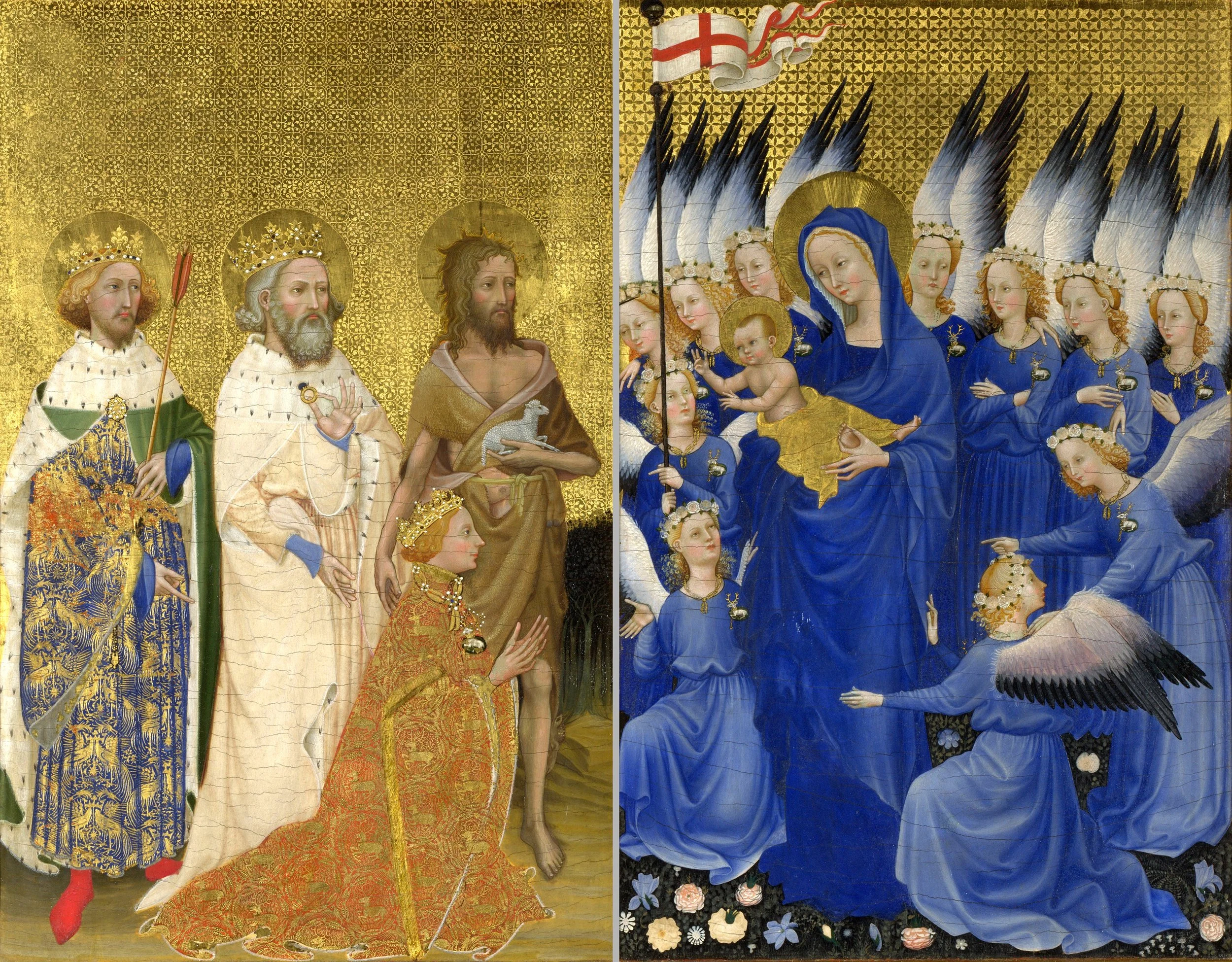
England had been governed in careful balance. Authority exercised in the young king’s name, yet not fully by him.
That arrangement brought stability but certainty had faded. In its place stood inexperience. And England adjusted itself to necessity.
Necessity, though, cannot define a reign forever.
In the previous chapter, we watched John of Gaunt carry the burden of governance while Richard remained at the centre of the realm in symbol more than substance.
That balance held for a time.
But the boy who had grown up surrounded by power was about to step into it.
He was only ten years old when he became king.
Crowned in 1377, the young Richard II of England inherited not only a throne, but the expectations that came with it. As the grandson of Edward III of England, he stood at the continuation of a long and powerful dynasty. Yet the England he inherited was different from the one his grandfather had first ruled. War with France continued, taxation pressed heavily upon the people, and confidence in governance was fragile.
For the early years of his reign, others exercised authority around him. Councils governed. Powerful relatives advised. The king was present, crowned and visible, yet still growing into the responsibilities that surrounded him.
Richard was intelligent, devout, and conscious of the dignity of kingship. Those who observed him noted his composure and his awareness of ceremony. He did not rush to seize control. He was, at first, a young king learning the shape of power.
England, however, was restless.
The Boy Who Faced a Kingdom in Revolt
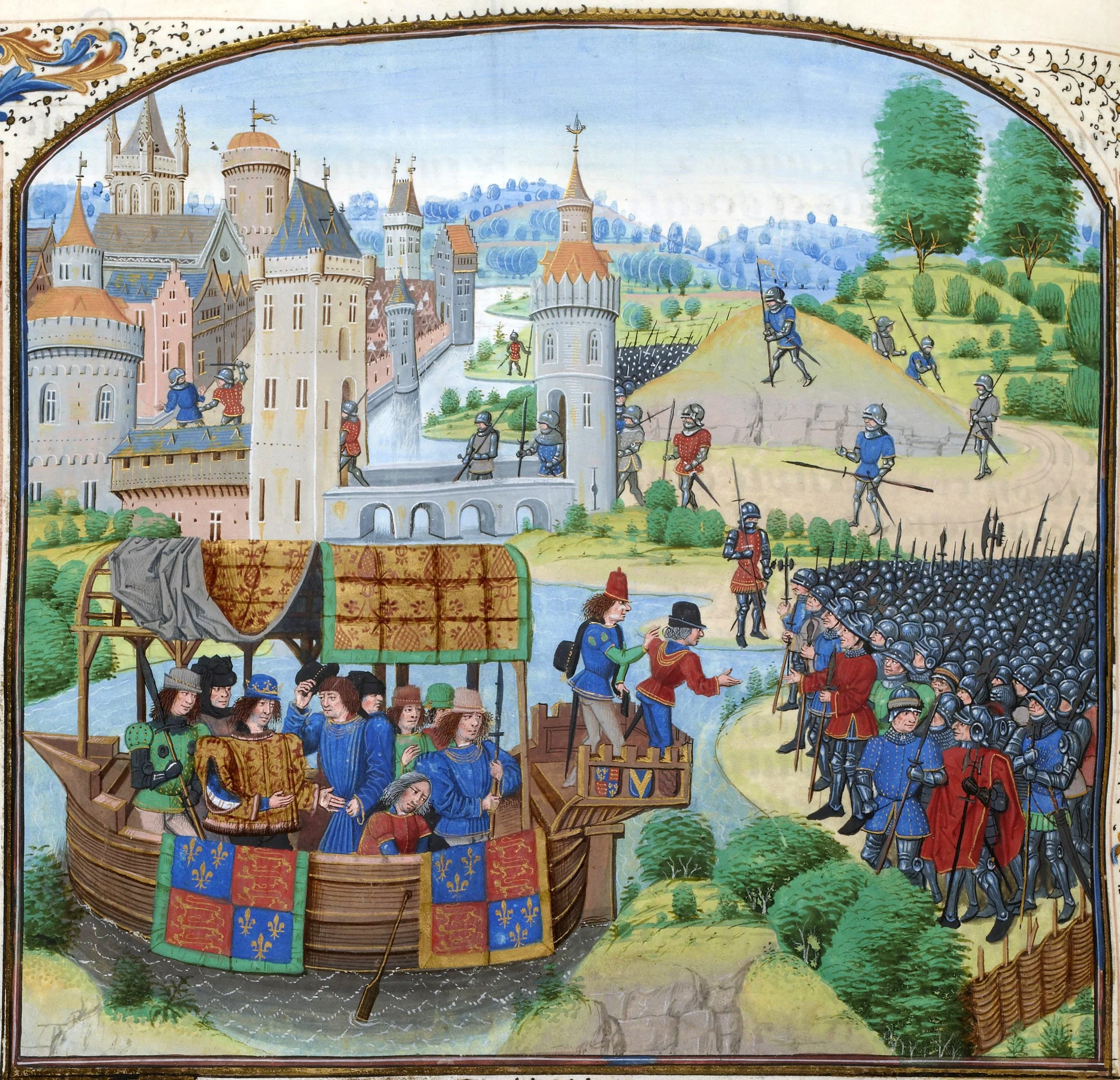
In June 1381, unrest that had been simmering for years finally ignited. What we now call the Peasants' Revolt swept through the south of England and into London itself. Years of war taxation, especially the deeply unpopular poll taxes, had strained ordinary people to breaking point. Anger found its voice.
This was not a scattered disturbance. It was organised and purposeful.
Rebels moved through London targeting symbols of authority. Debt prisons were opened and prisoners released. Legal and tax records were dragged into the streets and burned, an attempt to erase obligations and wipe away the written proof of what was owed.
Certain individuals were singled out. The Archbishop of Canterbury, Simon Sudbury, who had served as Lord Chancellor, was seized and executed.
The Savoy Palace, the grand London residence of John of Gaunt, was attacked and set ablaze. Gaunt himself was not present, but his association with taxation and royal policy made him one of the most resented figures in the realm.
The destruction was strikingly deliberate. According to contemporary accounts, Wat Tyler forbade looting. Furnishings, plate, and treasure were not carried off but thrown onto bonfires. One man who attempted to steal silver was reportedly executed by the rebels themselves. This was not pillage for profit. It was an act of fury aimed at erasing what the palace represented. London was not merely restless. It was volatile. Richard was still only fourteen years old and not yet ruling independently. Councils still guided policy, while senior nobles remained key in shaping decisions. He was, in many ways, a boy learning how kingship functioned around him.
And yet when thousands of rebels gathered outside London, it was the king they demanded to see. At Mile End, and later at Smithfield, the young Richard II of England rode out to meet them. Chroniclers suggest he remained composed, speaking directly to men who were angry, armed, and uncertain of what would happen next. When the rebel leader Wat Tyler was killed during negotiations, panic rippled through the crowd.
It was at that moment that Richard is alleged to have stepped forward and declared, “I am your captain now.” Whether those were his exact words or a chronicler’s flourish, the meaning is clear. A fourteen year old king steadied a volatile situation that could easily have descended into chaos.
He did not face the revolt as a seasoned ruler defending his authority. He faced it as a boy who understood that the crown he wore required him to stand where others might not.
Growing into Kingship
The revolt was suppressed within weeks. Concessions that had been promised were gradually withdrawn. Order returned, at least outwardly.
Richard was still only fourteen.
Yet he had witnessed how quickly authority could fracture. He had seen senior officials executed. He had watched London burn. It is difficult to imagine that such lessons faded easily.
As the years passed, he stepped more confidently into his role. Councils still advised, but Richard was no longer simply observing. He was forming loyalties and shaping the court in ways that reflected his own preferences.
One figure rose particularly high in his favour: Robert de Vere, Earl of Oxford. Richard elevated him rapidly, creating him Marquess of Dublin and eventually Duke of Ireland, a promotion that unsettled older nobles who saw ancient hierarchies overturned. De Vere’s prominence was not merely a matter of friendship. It signalled where influence now lay.
Not all were content to watch that influence grow.
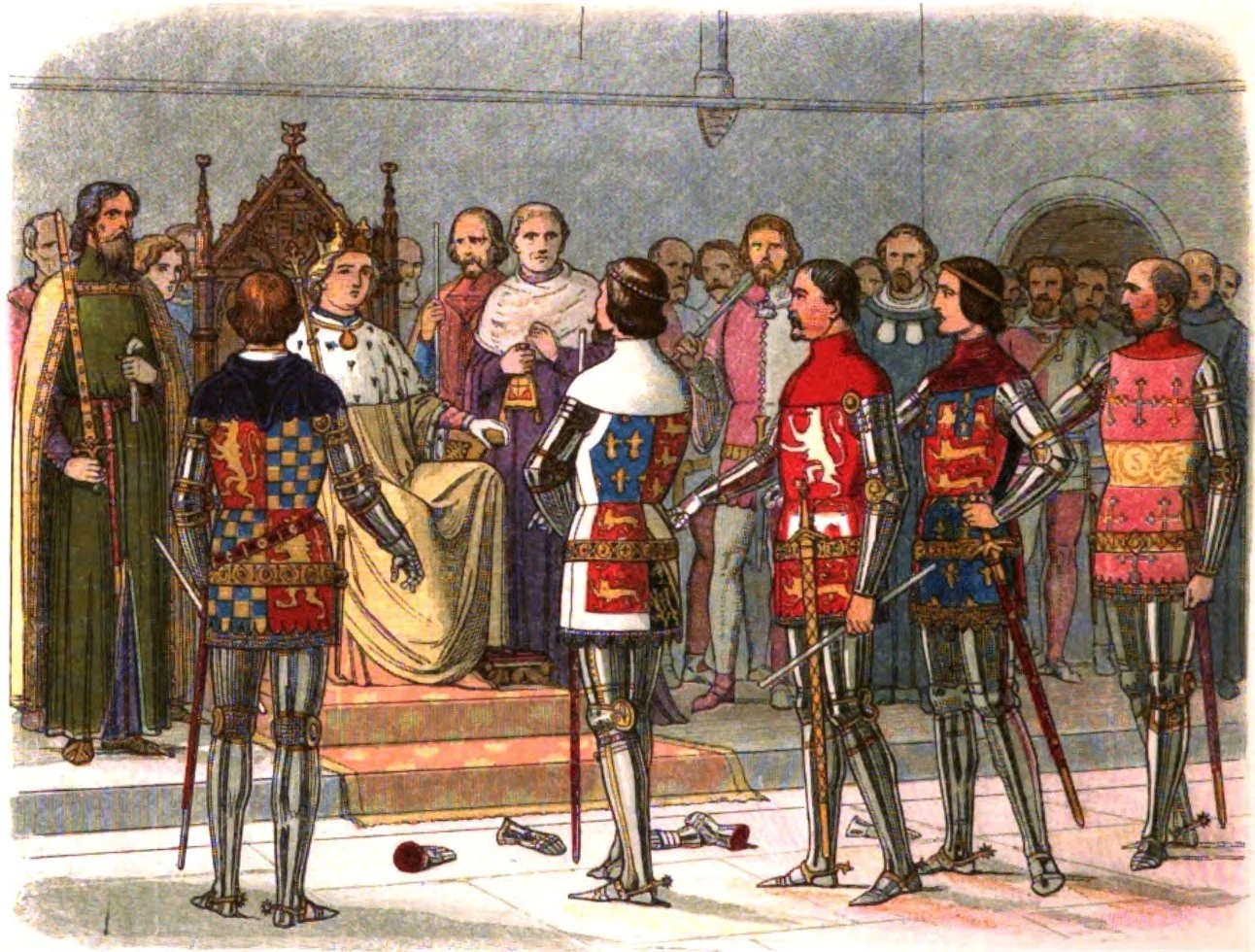
In 1387, a group of powerful nobles moved against the king’s circle. Among them were Thomas of Woodstock, Duke of Gloucester, the king’s own uncle, Richard Fitzalan, 11th Earl of Arundel, Thomas de Beauchamp, 12th Earl of Warwick, and the younger lords Henry Bolingbroke and Thomas de Mowbray, 1st Duke of Norfolk. They would become known as the Lords Appellant. Their stated aim was to remove corrupt advisers. In practice, it was a direct challenge to royal authority. De Vere’s forces were defeated at Radcot Bridge in December 1387, and he fled into exile. Parliament later condemned him, stripping him of his titles and lands. The man who had risen so rapidly in royal favour died abroad in 1392, far from the court that had once revolved around him. The confrontation culminated in the Merciless Parliament of 1388, where several of Richard’s closest allies were condemned and executed.
For a time, the king found himself politically constrained.
He had worn the crown for over a decade, yet others still dictated the limits of his power. The memory of his great grandfather Edward II of England may not have been far from anyone’s mind. A king who had elevated favourites. A king who had faced noble opposition. A king whose authority had ultimately collapsed.
Richard was not deposed in 1388, but he had been publicly checked.
And he most certainly did not forget.
Regaining Control
The restraint placed upon Richard in 1388 did not last forever. By the early 1390s, the balance of power had shifted once more. The immediate crisis had passed. Open confrontation had eased, though the men who had once challenged the king’s authority remained influential figures within the realm. And Richard was now in his early twenties.
He began to exercise authority with far greater confidence. The humiliations of the Merciless Parliament were not repeated. Instead, the king asserted his role more deliberately, emphasising the dignity and sacred nature of kingship. Court ceremony became more formal. Access to the king grew more controlled. He did not move rashly at first. For several years, his rule appeared measured. He pursued peace with France. He showed clemency to some former opponents. There was even a sense, for a time, that stability might return.
But beneath that outward steadiness, memory lingered.
The experience of being publicly constrained, of watching his closest companions condemned, had not been forgotten. Authority, once challenged, can harden. And in 1397, nearly a decade after the Lords Appellant had forced their will upon him, Richard acted decisively. Thomas of Woodstock, Duke of Gloucester, was arrested and later died in custody under circumstances that have long been questioned. Arundel was executed. Warwick was exiled. The reckoning was delayed, but it had been inevitable.
Richard was no longer the boy who rode out to steady a crowd. He was a king determined that no one would again dictate the limits of his power.
The Quarrel That Changed Everything
By 1398, Richard’s authority appeared secure. He had reasserted control over those who had once constrained him. The court was orderly. The king’s dignity unmistakable.
Then a dispute erupted between two men who had once stood together among the Lords Appellant: Henry Bolingbroke and Thomas de Mowbray, 1st Duke of Norfolk. The accusation was serious. Bolingbroke claimed that Mowbray had spoken treason against the king. Mowbray denied it. In a society where honour and loyalty were paramount, such a charge could not simply be ignored. The matter escalated toward trial by combat.
At Coventry, on 16 September 1398, the lists were prepared. Nobles gathered, and ceremony unfolded. Two powerful men stood ready to fight under the gaze of their king.
Then at the last moment, Richard intervened.
Instead of allowing the duel to proceed, he banished both men from the realm. Mowbray was exiled for life. Bolingbroke was given a term of ten years, later reduced to six.
It was a decisive act. On the surface, it prevented bloodshed. It reinforced royal authority. The king had stepped in as arbiter rather than spectator. But in removing both men, Richard also removed potential rivals and the last of the appellants from the immediate political stage. Mowbray departed England and would never return, dying abroad the following year. His story would end far from the political heart of the kingdom.
Bolingbroke’s exile, however, had barely begun when, in February 1399, little more than four months after the halted duel, his father, John of Gaunt died.
And the decision that followed would prove far more consequential than exile.
The Line That Could Not Be Uncrossed
When John of Gaunt died on 3 February 1399, the vast Lancastrian estates should, by custom and law, have passed to his son, Henry Bolingbroke. Bolingbroke was still in exile. And instead of allowing the inheritance to proceed as expected, Richard intervened. He declared that the estates would revert to the crown. Bolingbroke’s term of exile was extended to life. The lands, revenues, and influence that had sustained the House of Lancaster were absorbed into royal control.
It was a legal act. But it was also a political one.
Inheritance in late medieval England was not merely about property. It was about continuity. Legitimacy. The understanding that noble families held their lands by recognised right, not by the shifting favour of a king. By disinheriting Bolingbroke, Richard altered that understanding. If a king could suspend the lawful succession of the realm’s greatest magnate, what assurance did others possess? Richard may have seen the decision as practical. Consolidating power. Preventing a potential rival from returning with immense resources at his disposal. Yet to many observers, it signalled something deeper. Authority was no longer simply being defended. It was being asserted beyond established limits.
Bolingbroke had been absent from England for only a few months when his inheritance was removed.
He would not remain absent for long…
What began as the steady growth of a young king into his authority had, by 1399, become something more dangerous. The removal of Bolingbroke’s rightful inheritance was not an outburst. It was a decision. And in that decision, the balance between crown and consent shifted.
In our next part, exile gives way to return, and the crown itself is placed in question.
If you would like to walk the same paths where these stories unfolded, join us on tours through England and/or France, where the echoes of the Plantagenets still linger.
Explore our tours
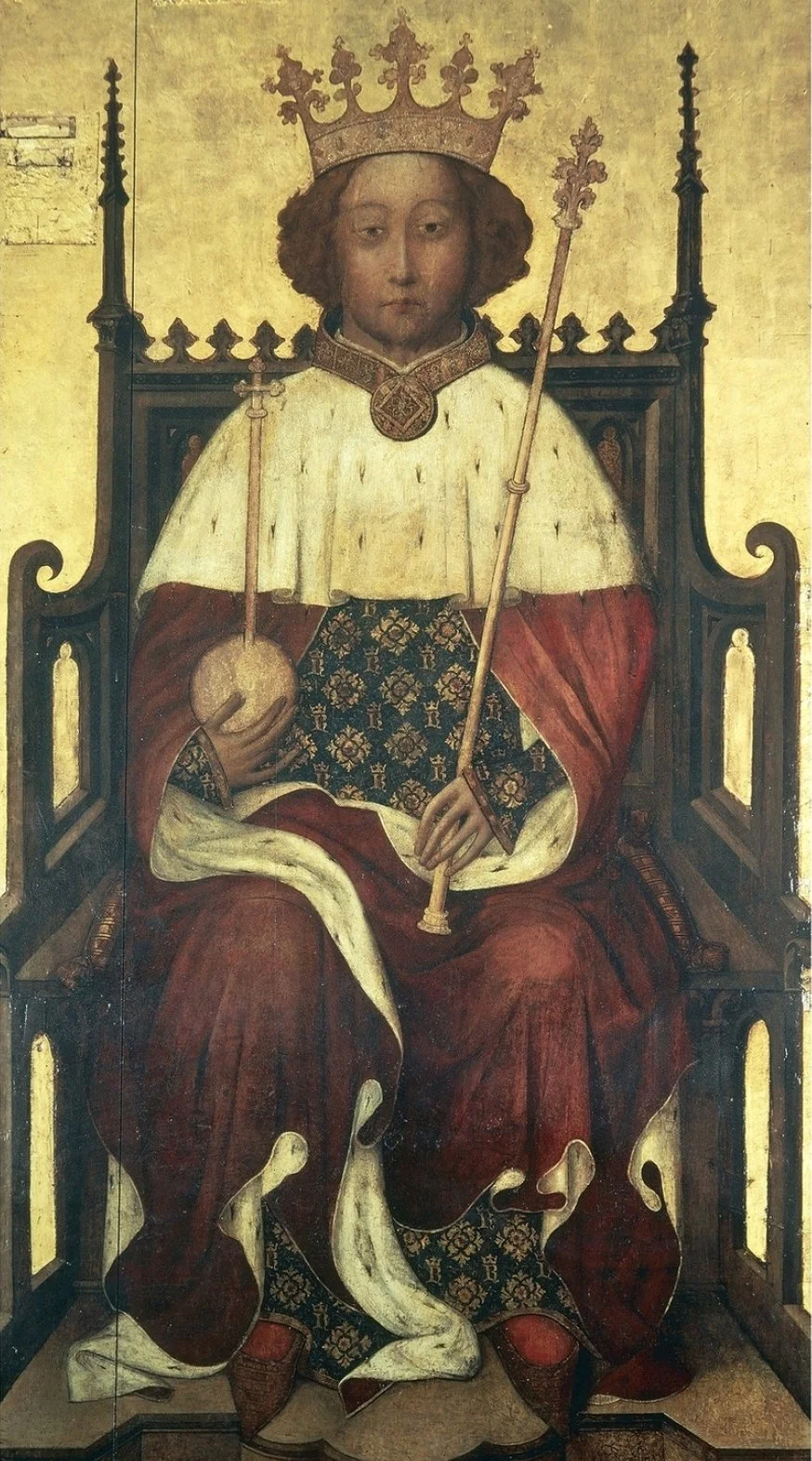
Images: Wilton Diptych, Peasants Revolt, Merciless Parliament, Richard II Portrait (Wikimedia Commons) Public domain