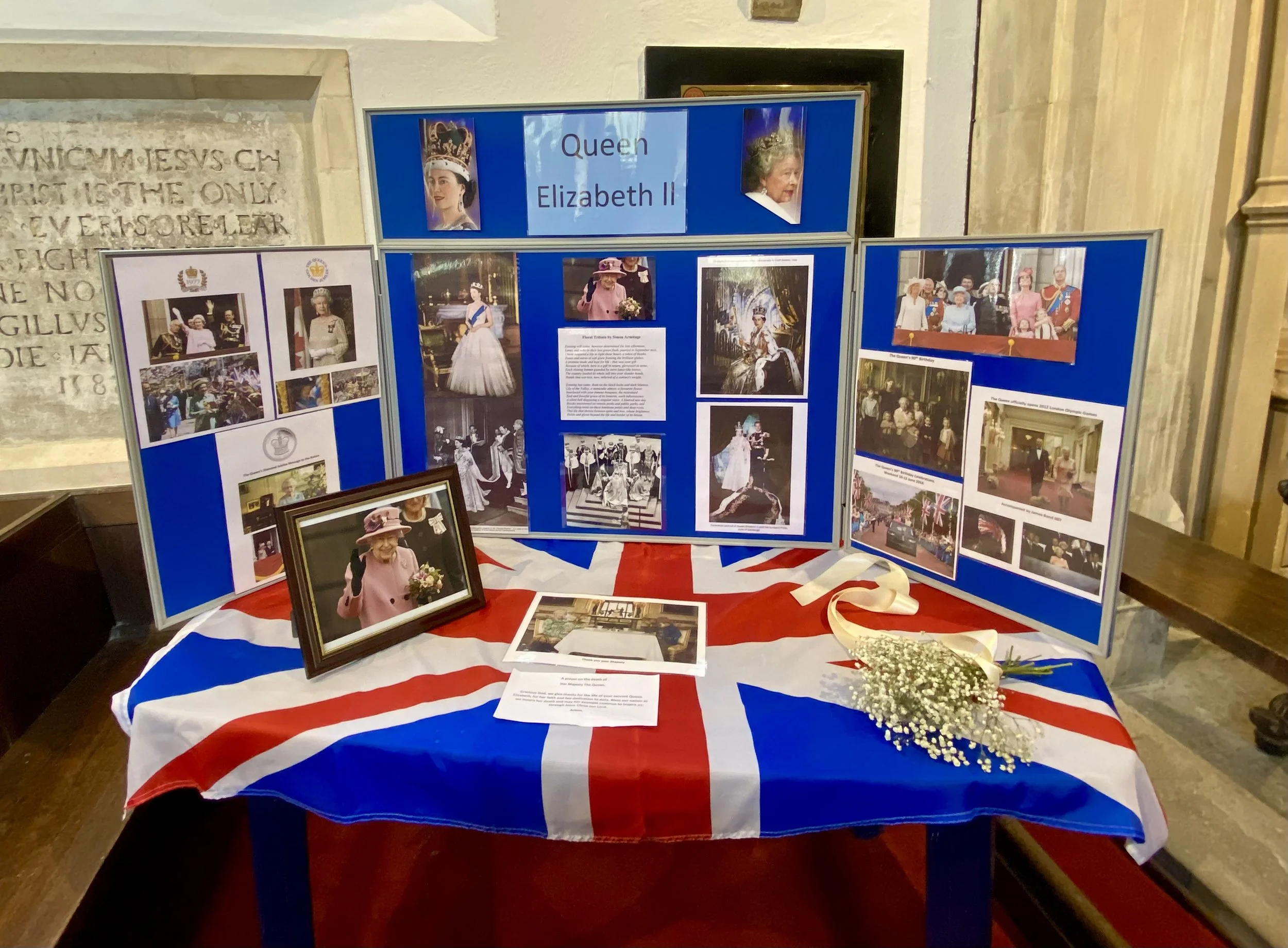
We spend so much time looking back at history. We visit the places where it happened, read about the people who shaped it and try to imagine what it must have felt like to live through those extraordinary moments.
But every now and then, history happens around us.
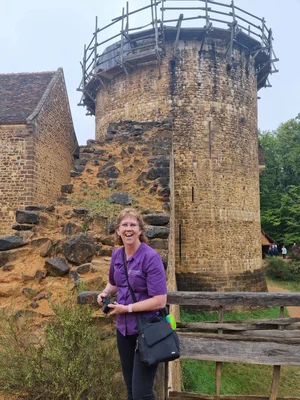
In September 2022, I travelled to France and England in search of stories from more than 500 years ago. Then Queen Elizabeth II died, and quite unexpectedly, I found myself experiencing something I had spent years trying to understand through the pages of history.
Do You Remember Where You Were?
Do you remember where you were when you heard the news that Queen Elizabeth II had died?
For so many of us, she had simply always been there. In a world where monarchs once came and went with sometimes alarming regularity, Elizabeth II had been Queen for seventy years. A large proportion of the population had never known another monarch, and even for those who could remember her father, King George VI, seven decades had passed since Britain had last experienced the death of its sovereign.
I remember exactly where I was.
It was 8 September 2022 and I was in France on the very first scouting trip for Plantagenet Discoveries. We were sitting in a tiny café in Le Mans eating crêpes when my son-in-law looked at his phone and suddenly exclaimed, “Oh no, the Queen is dead.”
There was something almost surreal about receiving news of such magnitude in such an ordinary moment. One minute we were eating crêpes and talking about our day, and the next we were trying to take in the fact that a reign which had lasted longer than any of us had been alive had ended.
What surprised me over the days that followed was the reaction of the French people around us. Upon returning to our accommodation that evening, the lovely lady who was our host was genuinely devastated that we had lost our Queen. And as we continued travelling, so many people would hear our Australian accents and offer their condolences.
That touched me more than I expected.
Perhaps it was particularly poignant because of why I was in France in the first place. I was travelling through places associated with the Plantagenets, exploring the stories of a period when the relationship between England and France was so often defined by rivalry, conflict and war. More than five hundred years later, here I was following the stories of those medieval kings and queens, while French strangers were expressing genuine sadness over the death of ours. It was a very strange and unexpectedly moving experience.
A City Holding Its Breath
We arrived in London on 15 September, a week after the Queen's death and just four days before her funeral. As we stepped off the Eurostar, I remember hearing people around us talking about having travelled over from France especially for the funeral. I turned to my friend and joked, “Well, we've come from Australia.” It wasn't technically true, of course, but it did make us laugh.
It also brought home just how significant this moment was. Here were people who had boarded the same train as us in Paris, not simply travelling to London, but specifically because they wanted to be there for the funeral.
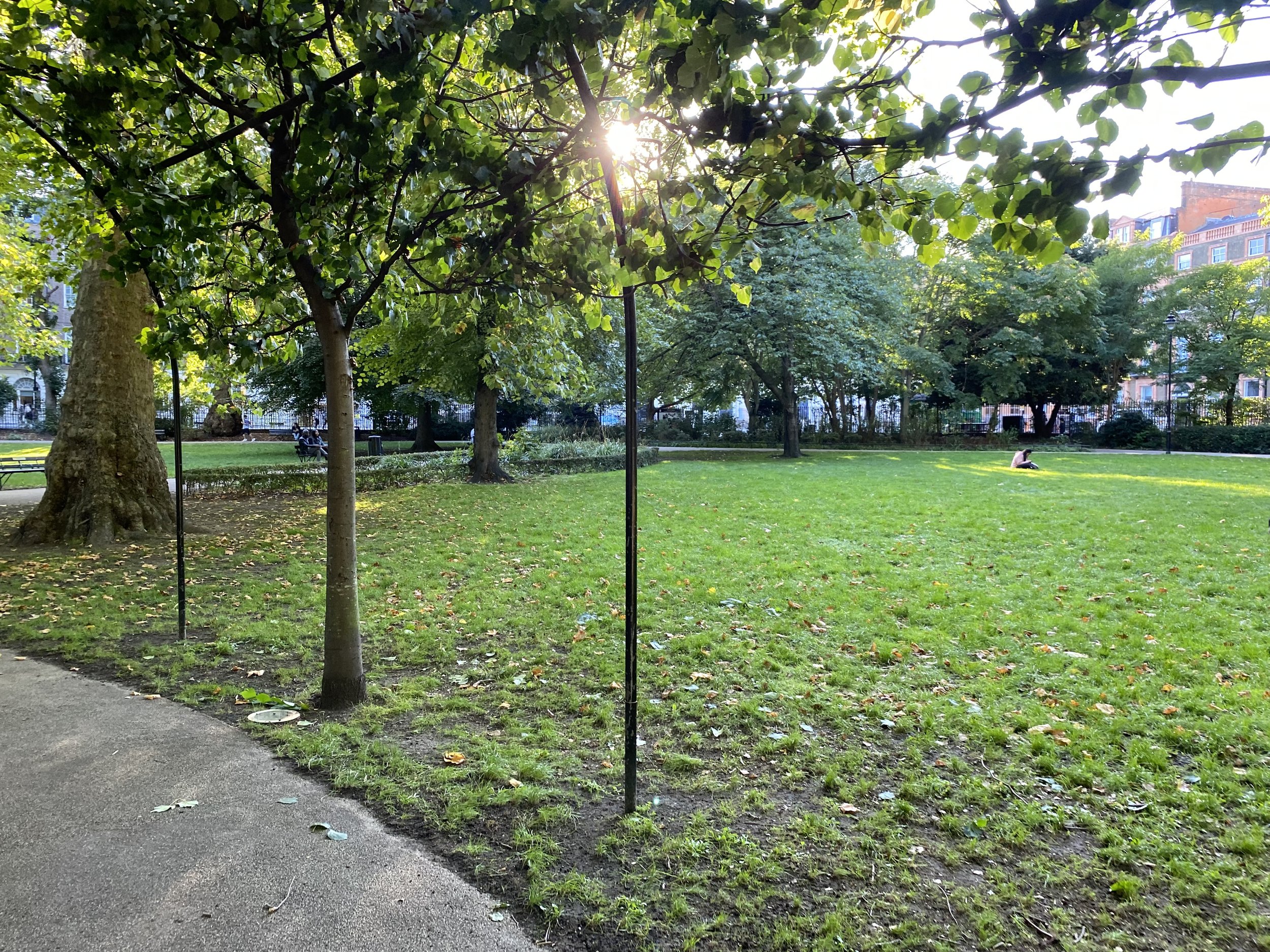
What struck me most once we were out in London, though, was the atmosphere. Contemporary reports described a city that was sombre, quiet and reflective, and having arrived there right in the middle of it, I can tell you that description was remarkably accurate. Even Russell Square, normally a busy garden square in the heart of London, seemed extraordinarily empty when I photographed it during our stay. There were just a handful of people scattered across a space that I would normally be filled with Londoners, tourists and students.
There was a strange stillness about London, almost as though the entire city was holding its breath. I remember finding that feeling quite peculiar. It was the sort of stillness I might have expected during those uncertain hours at Balmoral, when news of the Queen's declining health was beginning to emerge and nobody knew what would happen. Yet by the time we arrived in London, a week had passed since her death and Charles had already been proclaimed King. Somehow, though, the city still seemed suspended between the end of one extraordinary reign and everything that was yet to come.
Of course, beneath that stillness was an enormous operation. Thousands of people were queuing for hours to enter Westminster Hall, where the Queen was lying in state. This continued a tradition that has seen monarchs and other significant figures lie in this ancient hall for more than a century. The queue stretched for miles along the Thames, as people waited for the opportunity to walk through the ancient hall and pay their respects. Many had travelled from across Britain and much further afield simply to be there.
We were about to discover just how much all of this could disrupt even the best-laid travel plans. We had already arranged to leave London on the day of the funeral to begin the English part of our scouting trip. Then we discovered the Car Hire company where we were supposed to collect our hire car was closed, as well as huge sections of central London being totally inaccessible, and our simple plan to pick up a car and drive away became considerably more complicated.
Eventually, we had to organise taxis to get us all the way out to Heathrow simply so we could collect a car and escape London.
At the time, it was quite stressful and felt like complete chaos. Looking back, however, even that became part of the experience. We weren't watching an historic event neatly from the outside. For a brief period, we were living in a city completely reorganising itself around the death and funeral of its monarch.
History in the Making
A few days before the funeral, I was standing in a queue outside the British Museum when my daughter Jaime called me from Australia. During our conversation, she asked whether I was going to see the Queen lying in state at Westminster Hall.
I told her that I definitely wasn't. The queues were extraordinary with people already waiting for many hours, and within a couple of days the official estimate would stretch to more than 24 hours. I simply didn't have the luxury of giving up what could have been an entire day of a scouting trip that had taken so much planning. Chris and Martin had walked close to Westminster and seen the queues for themselves. As much as I understood why people wanted to be there, I had accepted that it wasn't something I was going to be able to do.
Jaime, however, was horrified. “Mum, this is history in the making. You are so passionate about history. I cannot believe you’re not going to go and see her.”
Her words stayed with me because she was right about one thing. I had travelled halfway around the world because of my passion for history. In fact, that same passion was the reason Plantagenet Discoveries existed in the first place. I was there scouting places connected with kings and queens who had lived and died more than five hundred years earlier. I spend so much of my time trying to understand their lives, visiting the castles where they lived, standing beside their tombs and thinking about moments when the death of a monarch changed everything.
Yet here I was, living through the death of a monarch myself.
Of course, the world of Queen Elizabeth II bears little resemblance to that of Henry II, Eleanor of Aquitaine, Edward III or Richard III. The death of a medieval king could bring uncertainty over the succession, political manoeuvring, rebellion and sometimes war. There was no such uncertainty in September 2022. The moment Elizabeth II died, Charles became King.
But watching what happened around me made something I had read about countless times feel suddenly very human.
For seventy years, Elizabeth II had been Queen, and for millions of people, she was the only British sovereign they had ever known. Her portrait was on coins and banknotes. Her name was woven into institutions, ceremonies and everyday life. Then, in a single moment, she was gone, one reign ended and another was beginning.
Perhaps that was what I had been sensing in the strange quietness of London. The country wasn't waiting to discover who would become King. It was adjusting to the fact that someone who had seemed like a permanent part of its landscape was suddenly no longer there.
Despite Jaime thinking I had gone mad, I didn't join the queue at Westminster Hall in the end. But what that conversation did do was change the way I looked at everything happening around me.
I had gone to France and England searching for traces of history. I had expected to find them in castles, cathedrals, tombs and ancient streets. Instead, for those extraordinary few days in September 2022, history wasn't something safely contained in the past.
I was standing right in the middle of it.
If stories like this are the reason you love travelling through history too, you can discover the journeys we create at Plantagenet Discoveries.
Images: © Plantagenet Discoveries