The Winter Mantle by Elizabeth Chadwick
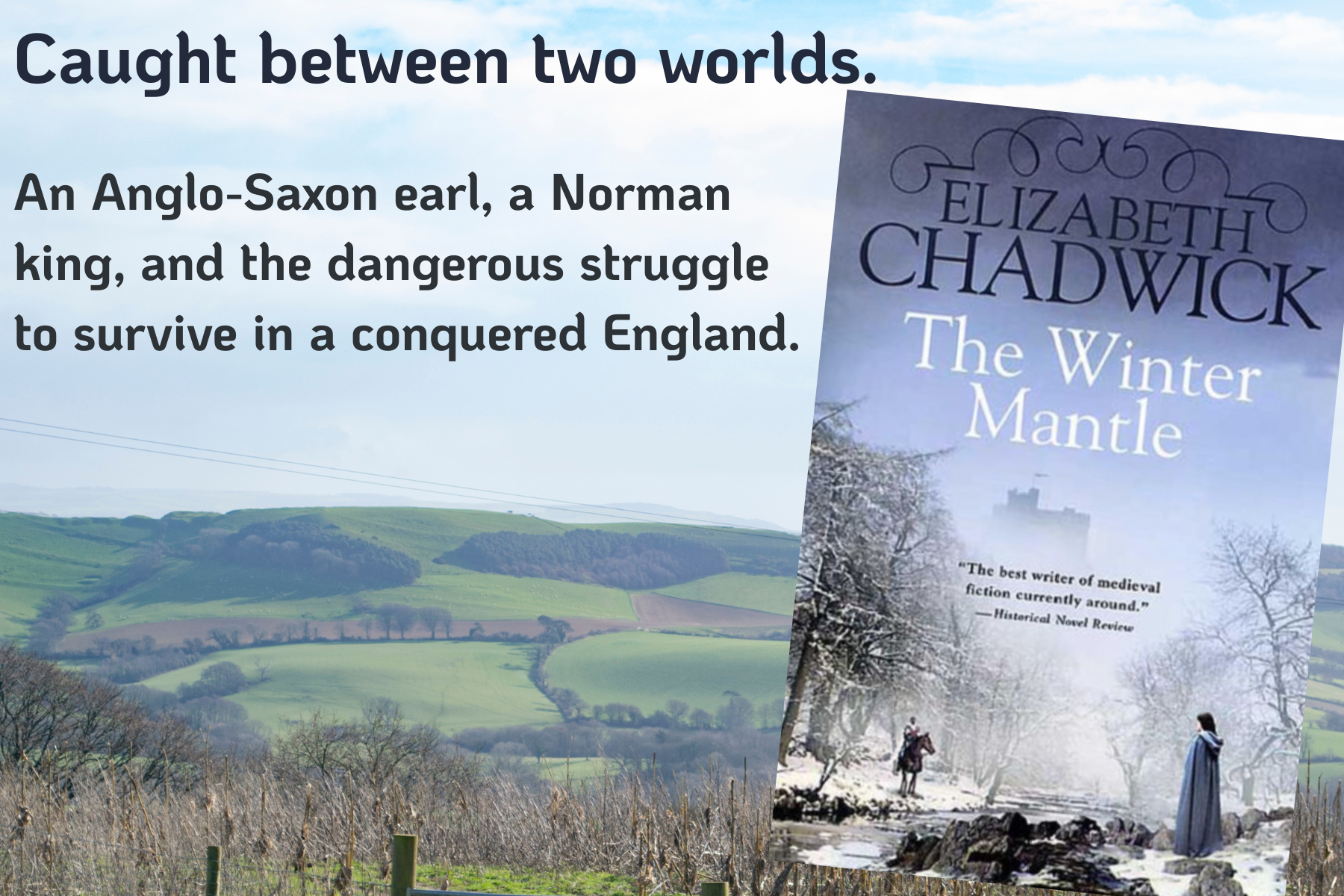
Apart from William the Conqueror, almost everyone I met in The Winter Mantle was new to me. Within a few chapters, I was completely drawn into the story of Waltheof, an Anglo-Saxon earl trying to find his place in William's newly conquered England.
I had no idea where his story would lead, and perhaps that was just as well.
By now a lot of you would already know my mantra, “every day is a school day,” and The Winter Mantle certainly proved that. It wasn't long before I was doing what I so often do when reading historical fiction, disappearing down rabbit holes to find out more about the real people behind the story. And this time, there was an awful lot for me to uncover.
One of those discoveries absolutely delighted me. Waltheof was the great-grandson of Uhtred the Bold of Bamburgh, a name that will immediately ring bells for anyone who has read Bernard Cornwell's The Last Kingdom series. Cornwell's Uhtred of Bebbanburg may be fictional, but those books led many of us to discover the real Uhtred the Bold and the remarkable family that ruled in the north of England. Suddenly, the Waltheof I was getting to know in The Winter Mantle was connected to another corner of medieval history I already knew and loved.
The Winter Mantle is divided into two parts, although I had no idea as I began reading just how significant that division would become. As Waltheof's story unfolded, I grew increasingly attached to this courageous and tender man and became deeply invested in his complicated relationship with his wife, Judith.
And then I made the discovery that would change the way I read the rest of his story.
While trying to find out more about Waltheof, I was devastated to learn that he had actually been executed for treason.
I can still remember sitting at the computer with my head in my hands, saying, “No, no, no. This can't be happening. You can't do that to him.” I was genuinely upset. By then Waltheof had become so real to me that discovering what William had done to him felt almost personal. I was angry with William the Conqueror in a way I had never been before, and I actually put the book down because I couldn't bring myself to face what I now knew was coming.
It took me a couple of days to pick it up again. When I did, I read the rest of Waltheof's story completely differently. I knew where it was heading, and as the events leading to his execution unfolded, I kept desperately wishing that somehow history might change its mind and give him a different ending.
The second part of The Winter Mantle moves forward to Waltheof's daughter and the man she marries, but I was surprised by how strongly Waltheof remained part of their story. His death doesn't simply close one chapter and make way for another. The consequences of what happened to him continue through his family, affecting his daughter, his widow and the relationships between them.
I think this is one of the things Elizabeth does particularly well in the novel. Waltheof is gone, but the people who loved him still have to live with what happened, and their memories of him don't always sit comfortably alongside one another.
Although The Winter Mantle tells two love stories, it was Waltheof and Judith's that affected me most deeply. There were times when I wanted to grab Judith by the shoulders and yell, “What were you thinking?” Yet the more Elizabeth revealed about their marriage, the harder it became to see either of them in simple terms. There was love between them, but there was also duty, fear, divided loyalties and the enormous pressure of trying to survive in the political world created by the Norman Conquest.
By the end, I found myself grieving for Judith almost as much as I had for Waltheof. Knowing what happened to him was heartbreaking enough, but seeing what was left behind made their story even sadder.
And then there is the winter mantle itself. From the very beginning, the blue fur-lined cloak passes through the story alongside the people who own, wear and remember it. I loved the way Elizabeth took something so tangible and allowed its meaning to change as the years passed. It becomes connected with love, memory and loss, carrying pieces of one generation into the next.
That blue mantle came to feel like another character in the story. Every time it appeared, it carried with it everything that had happened before, and I thought that was such a clever way of linking the two halves of the novel.
I began The Winter Mantle knowing almost nothing about Waltheof. By the time I finished it, I had grieved for him, become furious with William the Conqueror, felt desperately sorry for Judith and discovered an entire corner of medieval history I wanted to know more about. For me, that is exactly what the best historical fiction should do.
If, like me, Waltheof is little more than a name to you, or perhaps not even that, I think this is a wonderful way to meet him. Just be warned. You may find yourself becoming rather more emotionally involved in his story than you expected.